
India Meteorological Department has issued an orange alert for Mumbai, warning of very heavy rains at isolated places with strong winds on Monday as cyclone Tauktae is likely to pass close to the Mumbai coast.
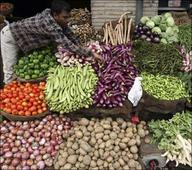
The CII has suggested a 5-point agenda on the measures that need to be undertaken by central and state governments to stave off the adverse effects of a deficient monsoon. Let's find out what this agenda is. . .

Highly placed sources said that Singh was apprised of the agricultural situation across the country and officials expected that 95 per cent of sowing operations would be completed this month. The weather office expects monsoon to be near normal in July, which is crucial for the 235-million strong farming community.

The India meteorological department on Sunday issued an 'orange' alert for Gujarat, saying the state was expected to receive "heavy to very heavy rainfall" on July 24.

Aizawl has been cut off from the rest of the country due to a landslide on National Highway 6 at Hunthar.

Rains were 26 per cent above normal across the country.

Delhi recorded a cold wave for the second consecutive day on Friday, with the minimum temperature at Ayanagar in southwest Delhi plunging to a numbing 1.8 degrees Celsius.

Rain-related incidents claimed nine more lives in Gujarat, taking the death toll to 16 in two days, while another 8,500 people were relocated and rescued from flood-affected areas with rains continuing to lash some parts of the state for the fourth consecutive day on Wednesday, officials said.
After a week's delay due to Cyclone Phet, the south-west monsoon finally restarted on its course on Monday, according to the India Meteorological Department.

The weather bureau has issued a red alert for neighbouring Raigad and Palghar districts predicting heavy to very rainfall at a few places and extremely heavy rain at isolated places for Wednesday. An orange alert is sounded for Thane district.

The India Meteorological Department said on Tuesday monsoon rains are expected to be below normal at 95 per cent of the long period average, with margin for error of plus or minus 4 per cent.

Airlines have been advised to reschedule services, to the convenience of passengers.

Food inflation further eased to 16.04 per cent for the week ended April 24, as arrival of rabi (winter) crops cooled down prices of essential items.

According to Ministry of Earth Science's air quality monitor 'SAFAR', the air quality is likely to improve from Friday onwards due to better wind speed.

An NDRF team has a strength of about 45 personnel and each unit is equipped with tree and pole cutters, communication gadgets, inflatable boats and a small basic medical unit.

Melting roads, deserted streets, exhausted pedestrians, and thirsty animals is what the scorching summer has left Indians with. Severe heat wave conditions currently prevail over many parts of the nation with temperatures in central and western India soar beyond 45C. Take a look!

The air quality is expected to improve further due to wind speed favourable for the dispersion of pollutants.

The maximum temperature at the Safdarjung Observatory, Delhi's base station, rose to 42.5 degrees Celsius.

Temperatures in March will be critical to determining the impact of any unusual heatwave conditions on this year's wheat crop in North India. It is that time of the year when the crop enters its vital grain-filling stage, say meteorologists and crop experts. So far, the high day temperatures in the North are not believed to have any significant impact on the final yields since the crop hasn't entered a stage where heat affects yields.

Delhi environment minister Gopal Rai on Monday said the ban on construction and demolition activities in Delhi will continue till further orders in view of the high air pollution levels.

Above-normal heatwave days are predicted in most parts of central, east and northwest India during this period.

The southwest monsoon is set to make its exit in style, bringing rains to the parched parts of Uttar Pradesh and Bihar, as weather forecasters have picked up signs of formation of a cyclonic circulation over Bay of Bengal. Addressing a press conference in New Delhi, India Meteorological Department (IMD) director general Mrutyunjay Mohapatra on Thursday junked last week's forecast of early withdrawal of southwest monsoon and announced the extended stay of the seasonal showers. "Even though we expected early withdrawal of the southwest monsoon, a cyclonic circulation over west-central and adjoining northwest Bay of Bengal will shift the monsoon trough southwards around September 7.

As the kharif season is setting in, India is scrambling to source fertilisers from the international market. It is set to sign long-term contracts - especially with Morocco and Latin American countries - to ensure steady flow of supplies. "We have to source fertilisers wherever it is available because crops have to be secured.

"We are expecting that the temperature will be higher than normal in the entire northwest India and the adjoining central India, starting with Gujarat, Rajasthan and up to east Madhya Pradesh and Chhattisgarh," he said at a virtual event on 'Building Climate Resilience for the Most Heat Vulnerable'.

The national capital has been witnessing an incessant spell of light to moderate rain for the past two days.

The much-awaited south-west monsoon on Monday brought first showers to the Andaman and Nicobar islands, setting the stage for its early progression towards Kerala.The onset of monsoon has now set the stage for the four-month rainfall season that has been eagerly awaited by the agricultural community who had to bear the brunt of a severe drought last year.The weather office said conditions were favourable for further advancement of the monsoon over more parts of Bay of Bengal
Southwest monsoon, critical for the farm-based economy of the country, is expected to reach Kerala on May 30, two days before its normal onset date in the coastal state.

Given IMD's past record on forecasts, the latest one could also go wrong.

The IMD had said the Southwest Monsoon would hit parts of north India including Delhi on July 10, but it had not occurred till Sunday evening.
The Southwest monsoon, crucial for agriculture across the country, has entered a weak phase and is expected to revive in the next two days. The weathermen have forecast strong westerly winds over the peninsular region, which is expected to aid the advance of monsoon in the next two days. Monsoon is expected to reach Mumbai by June 10.
With the India Meteorological Department declaring 2007 the fourth warmest year on record since 1901, evidence of global warming on the Indian climate is crystallising. The annual mean temperature in the country was recorded 0.55 degree Celsius higher than normal

Weather scientists attribute the early onset of southwest monsoon over Kerala to the influence of the remnants of cyclone Asani that triggered the cross-equatorial flow, a key factor for the seasonal rains.
Caught in a vicious grip of inflation, the government on Wednesday announced that the south-west monsoon, crucial for the nation's agricultural well being, would be near normal this season. "India Meteorological Department's long range-forecast for the 2008 south-west monsoon season is that the rainfall for the country as a whole is likely to be near normal," Earth Sciences Minister Kapil Sibal told reporters in New Delhi.

Some low-lying areas like the Andheri subway were submerged, forcing authorities to divert the traffic through alternate routes, civic officials said.

The south-west monsoon on Tuesday started withdrawing from parts of south-west Rajasthan and adjoining Kutch in Gujarat, with at least eight states, including rice bowl states of Uttar Pradesh and Bihar reporting deficient rains. It was for the first time since 2016 that the monsoon started withdrawing in the third week of September. "Southwest monsoon has withdrawn from parts of southwest Rajasthan & adjoining Kutch today, against its normal date of withdrawal from southwest Rajasthan of September 17," the India Meteorological Department (IMD) tweeted.
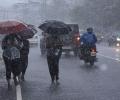
As heavy rains continued to batter Kerala, landslides and flooding were reported from many parts of the state, especially its southernmost district of Thiruvananthapuram, which was severely affected by waterlogging in several areas on Sunday.

Also, the monsoon this year may end up being the driest since 2015, which recorded a rainfall deficit of 13 per cent, they said.

Churu in Rajasthan is sizzling with a record temperature of 50 degree Celsius.

The forecast for better rains this seasons comes after India witnessed one of the worst droughts in recent times when the monsoon had failed last year.
There is good news for the Central government, which is struggling to rein in inflation. Monsoon rains were more than normal in June and the government can hope for a better kharif crop, which in turn may help reduce inflation.
 © 2026 Rediff.com - Advertise with us - Disclaimer - Privacy Policy - Sitemap - Feedback - About us - Terms of use - Grievances